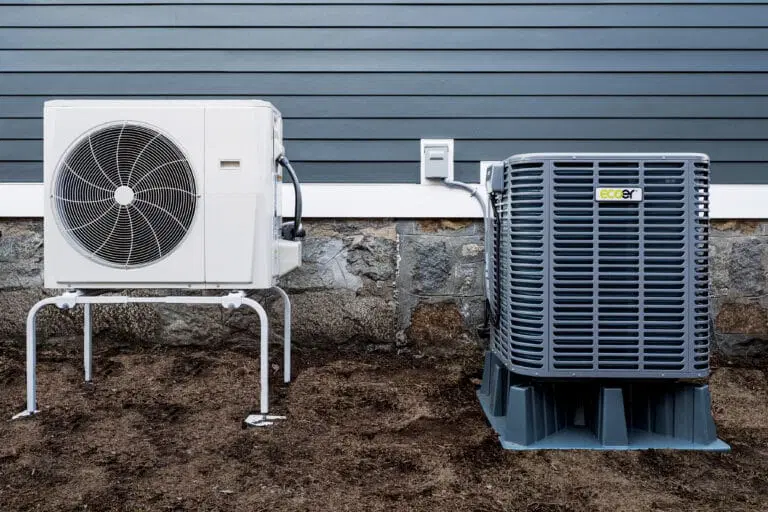




Short answer: In most San Diego homes, yes — a heat pump is worth it, mainly because our mild winters let it run efficiently almost year-round and it replaces both your furnace and your AC with one system. The exception is homes with expensive electrical panel upgrades needed, or homes without solar sitting on SDG&E’s higher electric rate tiers, where the payback period stretches out. There’s no one-size-fits-all answer — but there is a clear decision framework, which is what this article walks through.
Do You Actually Have to Replace It Right Now?
First, a clarification that clears up a lot of confusion: California has not banned gas furnaces today. The California Air Resources Board (CARB) has approved a rule that, starting in 2030, stops the sale of new gas furnaces and gas water heaters. It does not require you to remove a working gas furnace, and it doesn’t make existing systems illegal. If your furnace is running fine, you can keep using it, repairing it, and maintaining it indefinitely.
What the rule actually means: once your furnace fails after 2030, you won’t be able to buy a new gas furnace to replace it — your only options will be a heat pump or another electric system. That’s still years away, but it does change the calculus if your furnace is already older and showing signs of wear. If you’re seeing any of the 10 signs your heating system needs repair, it’s worth thinking about replacement timing now rather than waiting for a mid-winter breakdown to force the decision.
Why San Diego’s Climate Actually Favors Heat Pumps
Heat pumps have a reputation problem that doesn’t really apply here. In cold-winter states, older heat pump models lose efficiency and need backup electric resistance heat when temperatures drop below freezing. San Diego almost never sees that. Coastal and inland-valley winter lows here rarely dip past the mid-30s°F, well within the range where a modern heat pump — especially a cold-climate-rated unit like Mitsubishi’s Hyper-Heat line — runs at full efficiency without ever needing backup heat.
This is also why heat pumps are functionally a two-for-one purchase in San Diego: the same unit heats your home in December and cools it in August. You’re not buying a furnace and an AC system — you’re buying one system that does both, which is a meaningfully different cost comparison than in colder states where the furnace and the heat pump are truly separate purchases.
The Real Cost Comparison for San Diego
This is where a lot of national “heat pump vs. furnace” articles get San Diego wrong, because they don’t account for SDG&E’s electricity rates — among the highest in the country, currently averaging in the mid-40s¢/kWh for bundled residential service. That matters because it changes the running-cost math compared to, say, a state with cheaper electricity.
Here’s the honest version:
- Upfront cost:
A heat pump system typically costs about the same as, or slightly more than, a comparable gas furnace + separate AC replacement — but current rebates (where still available) and the fact that you’re buying one system instead of two often bring heat pump costs to parity or below. - Running cost without solar:
On SDG&E’s standard rates, a heat pump still usually wins on total efficiency because it moves heat rather than generating it — it delivers roughly 2–3 units of heating output per unit of electricity consumed. But the margin is tighter here than in states with cheap electricity, and if you’re on a high-tier rate with heavy usage, the gap narrows further. - Running cost with solar:
If you have rooftop solar (common across San Diego), a heat pump is close to a clear win — you’re often heating and cooling your home with electricity you’ve already paid for. - Cooling season:
San Diego’s AC season is long. Since a heat pump handles cooling exactly like a standard AC system (same SEER2-rated equipment, same technology), you’re not giving up anything on the cooling side to gain electric heating.
When a Heat Pump Makes the Most Sense
- Your AC or furnace is failing at the same time — replacing both separately almost always costs more than one combined heat pump system.
- You have rooftop solar, which flattens or eliminates the electric-rate disadvantage.
- Your home is coastal or inland-valley (not mountain), where winter lows rarely challenge a modern heat pump’s efficiency.
- You want to take advantage of whatever rebates are currently active — our Heat Pump Rebates & Financing page tracks what’s open right now, since state programs like TECH Clean California have moved in and out of availability throughout 2025–2026 — see our step-by-step guide to how that program works for the current status.
- Your electrical panel already has capacity (200-amp panels handle this easily; 100-amp panels may need an upgrade, which changes the math — ask your contractor to check this during the quote, not after).
When It’s Worth Sticking with Gas, For Now
- Your furnace is still relatively new and working well — there’s no efficiency argument strong enough to justify replacing a functioning system early, 2030 rule or not.
- You’re on a high-tier SDG&E rate without solar and use very little AC (rare in San Diego, but it happens in some coastal microclimates with heavy natural ventilation).
- A panel upgrade would add $2,500–$5,000+ to the project and you’re not planning to stay in the home long enough to recoup it.
- You genuinely prefer the simplicity of a gas system and aren’t bothered by the eventual 2030 sale cutoff — repairs and maintenance on existing gas equipment remain fully legal indefinitely.
If you’re not sure which category you fall into, it’s worth getting your existing system evaluated properly rather than guessing — see „Can You Heat Your Home with an Air Conditioner in San Diego?“ for a closer look at how heat pump heating actually performs here, in plain terms.
What This Actually Costs, By the Numbers
For an apples-to-apples budget, our 2026 HVAC pricing guide covers full installed costs across system types side by side. If you’re specifically considering a ductless mini-split heat pump setup instead of a central system — common in older San Diego homes without existing ductwork — our Mitsubishi mini-split installation cost breakdown and our ductless vs. central air comparison for older homes both apply directly to this decision.
A Middle Option: Dual Fuel
If you’re not ready to fully commit but want the efficiency benefit, a dual-fuel (hybrid) system pairs a heat pump with your existing gas furnace as backup — the heat pump handles the vast majority of heating and cooling, and the gas furnace only kicks in on the rare occasion temperatures drop low enough that gas becomes more cost-effective. In San Diego’s climate, that crossover point is hit so rarely that most homeowners here find a heat pump alone is sufficient, but it’s worth discussing during your quote if you want the backup for peace of mind.
Frequently Asked Questions
No. California’s rule only restricts the sale of new gas furnaces starting in 2030 — it doesn’t require removing a working furnace before then.
No. You can keep using, maintaining, and repairing an existing gas furnace indefinitely. The rule only affects new equipment sales.
Usually, yes, though the margin is narrower here than in states with cheaper electricity, because SDG&E’s rates are among the highest in the country. With rooftop solar, the advantage is clear-cut.
San Diego’s mild winters are close to ideal for heat pump performance — unlike cold-climate regions, backup electric resistance heat is rarely needed here.
A licensed contractor can assess your panel during the quote. If an upgrade is needed, it adds cost but is usually a one-time expense that also benefits future EV charging or solar additions.
If both are nearing end of life around the same time, a single heat pump system is almost always more cost-effective than replacing them separately.