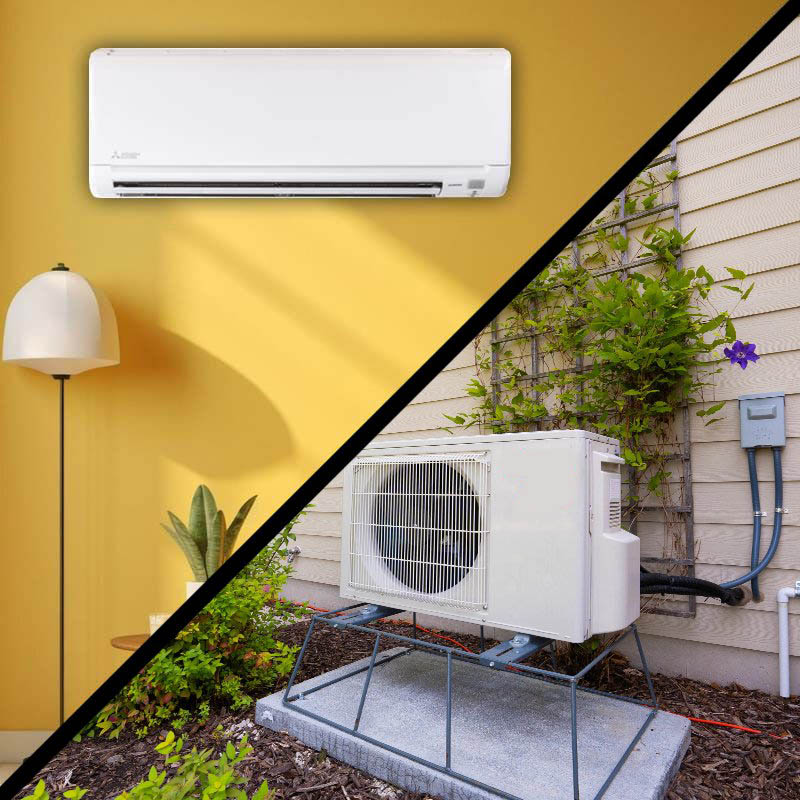




Short answer: In San Diego, a fully installed Mitsubishi mini-split runs $4,500–$7,500 for a single zone, $7,500–$12,000 for a 2–3 zone system, and $12,000–$18,000+ for a whole-home 4-zone-or-larger setup.
Mitsubishi sits at the premium end of the ductless market — expect to pay 15–25% more than a value-tier brand for the same BTU capacity, mostly for the inverter technology, the 12-year warranty (when installed by a Diamond Contractor), and features like the I-See Sensor.
If you’ve been searching around, you’ve probably noticed the numbers online swing wildly — anywhere from $1,200 to $20,000. That’s because most of those guides are national averages. San Diego has its own cost structure: higher labor rates than most of the country, mandatory C-20 licensing and Title 24 permitting, and a lot of homes (North Park, South Park, Golden Hill) that were never built with ductwork, which changes the math on comparable central-air upgrades. Here’s what a real quote looks like in 2026.
Mitsubishi Mini-Split Cost in San Diego, by Configuration (2026)
| Configuration | Typical Installed Cost | Best for |
| Single zone (9,000–12,000 BTU) | $4,500 – $7,500 | One room, ADU, garage conversion |
| Single zone (18,000–24,000 BTU) | $6,000 – $8,500 | Open-concept living/kitchen area |
| 2-zone system | $7,500 – $10,500 | Two rooms, small home addition |
| 3-zone system | $9,000 – $12,000 | Whole small home, 2-bed condo |
| 4–5 zone whole-home system | $12,000 – $18,000+ | Whole-home replacement, two-story house |
These figures assume a standard installation with reasonable electrical access. If you want the general HVAC picture across all system types (not just ductless), our 2026 HVAC pricing guide covers furnaces, central air, and heat pumps side by side. This article is the deep-dive specifically on Mitsubishi ductless systems.
What Actually Drives Your Quote
Zone count
The outdoor condenser is shared across zones, so a 3-zone system doesn’t cost 3x a single zone — each additional indoor head typically adds $1,800–$3,000 to the installed total, not a full system’s worth.
BTU capacity
Bigger isn’t automatically better. An oversized unit short-cycles, wastes energy, and wears out faster. We size every job with a Manual J load calculation rather than a rule-of-thumb chart — sun exposure on a west-facing Clairemont living room is very different from a shaded North Park bungalow, even at the same square footage.
Indoor unit style
Wall-mounted units are the standard and cheapest option. Ceiling cassettes and concealed ducted units (used when homeowners want a more finished look) add labor and typically $500–$1,500 per zone.
Line set length and routing
Standard runs are quoted up to 25 feet. Longer runs, second-story heads, or line-hide covers for a cleaner exterior look add to labor.
Electrical work
Many older San Diego homes (especially pre-1970s builds) need a new dedicated 240V circuit or a panel upgrade to support a multi-zone system. This is one of the most common reasons a quote comes in above the range.
Permits
California Title 24 requires a permit for ductless installation. It’s a non-negotiable line item, and any contractor who skips it is putting your home’s resale value and your warranty at risk.
Why Mitsubishi Specifically Costs More
Mitsubishi occupies the top tier of the ductless market alongside Daikin, next to mid-tier options like Fujitsu and value brands like Gree. A few things you’re actually paying for:
- Hyper-Heat (H2i) line — maintains full heating output in cold weather. Less critical for San Diego’s mild winters than it is elsewhere in the country, but it also means steadier, more efficient cooling performance during our long shoulder seasons.
- I-See Sensor — available on premium models, detects occupancy and sunlight and adjusts output accordingly, which matters more than you’d think in a west-facing room in Mission Valley or Rancho Bernardo.
- Marine-grade coil coating — relevant if you’re within a few miles of the coast. Salt air corrodes standard condenser coils faster in La Jolla, Coronado, Pacific Beach, and Ocean Beach. If you’ve had corrosion issues before, it’s worth reading our piece on common mini-split problems caused by San Diego’s salt air.
- The 12-year warranty — but only if the system is installed by a certified Diamond Contractor. Units bought online and self-installed, or installed by a non-certified shop, typically carry a reduced warranty or none at all.
What About Rebates?
This is where a lot of 2026 pricing guides online are simply out of date. Here’s where things actually stand as of mid-2026:
- The federal Section 25C tax credit (up to $2,000 for qualifying heat pumps) expired for any equipment installed after December 31, 2025. It does not apply to 2026 installations.
- TECH Clean California / HEEHRA single-family incentives are fully reserved statewide as of early 2026, with new applications going to a waitlist rather than an active queue.
- SDG&E still offers electrification guidance through its Customer Home Electrification Readiness Program (CHERP), along with financing options like GoGreen Financing, which can spread the cost over time even without a direct rebate.
Rebate programs shift constantly, and by the time you’re reading this, funding could have reopened.
We keep a running breakdown on our Heat Pump Rebates & Financing page, and we’re publishing a full step-by-step walkthrough of the TECH Clean California program separately — worth checking before you assume a specific dollar figure applies to your project.
Single-Zone or Whole-Home Multi-Zone?
If you’re only trying to fix one hot bedroom or cool a garage conversion, a single zone is the obvious call. But if you’re on the fence about doing more rooms later, it’s worth planning the outdoor unit’s capacity for future zones now — retrofitting a second zone later usually costs more than adding it during the original install. We break this down room-by-room for two-story homes in When One Head Isn’t Enough, and for ADUs and room additions specifically in Whisper Quiet Comfort.
Frequently Asked Questions
For most San Diego homeowners planning to stay 5+ years, yes — the efficiency, quieter operation, and warranty coverage typically offset the upfront gap. If you’re doing a rental property or a short-term flip, a value-tier brand may make more financial sense.
A single-zone install usually takes 4–6 hours. A 3–4 zone whole-home system typically takes 1–2 full business days.
Yes. California Title 24 requires it, and it protects your warranty and your home’s resale value. Licensed contractors handle this as part of the job.
Often, yes — especially in homes without existing ductwork, where retrofitting ducts would cost more than the mini-split itself. We compare this directly in Mini-Split vs. Central Air for Older San Diego Homes.
Some are, though the landscape changed significantly in 2025–2026 — the federal tax credit is gone and the main state program is on a waitlist. SDG&E financing and smaller local programs are still worth checking before you install.
Did you like this article and find it helpful? Share the link with your friends!
- Published on