




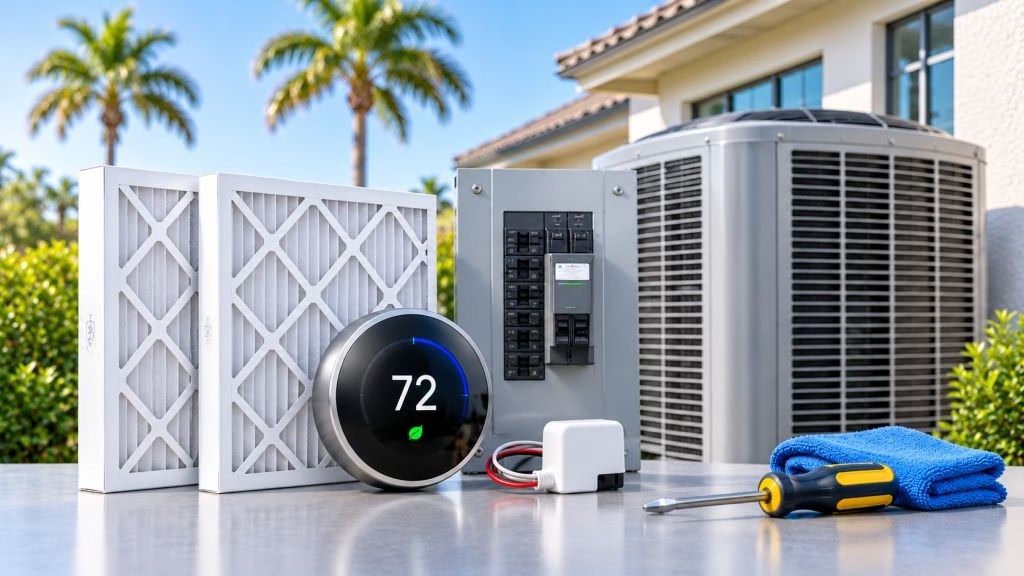
A plain-English guide to the HVAC products worth buying, with real options to compare in each category and honest notes on what fits which home.
Walk into a hardware store and you’ll find hundreds of HVAC products. Some are genuinely useful, some are a waste of money, and a few can hurt your system. Below are four categories we get asked about most, with well-known options in each. Models and availability change, and what fits depends on your system, so we leave prices out. If you’re unsure, ask us before you buy.
Air Filters
The cheapest product on this page and one of the most important. A clean, correctly sized filter protects your equipment and keeps air moving the way it should. It’s also the one you’ll buy again and again.
How to choose
Nordic Pure
MERV 8 Pleated
A solid everyday filter. Catches lint, dust, and pollen with the least airflow resistance of the pleated options.
- A good default for most homes
- Easy on your blower
- Standard and custom sizes available
Best for: Homes without heavy allergy or pet concerns
DIY-friendlyNordic Pure
MERV 11–12 Pleated
A step up for pets and allergies. The Tru Mini Pleat models add extra pleats for more filter surface area.
- Catches smaller allergens and pet dander
- A common balance of filtration and airflow
- Check your system’s limit first
Best for: Pet owners and allergy-prone households
Check compatibilityNordic Pure
MERV 13 Pleated
The highest filtration most homes should consider. Captures fine particles, including smoke.
- Helpful during wildfire smoke season
- Denser, so it can restrict airflow in some systems
- A clogged one restricts even more, so don’t let it sit
Best for: Systems designed for it, or homes with serious air-quality concerns
Check compatibilityNordic Pure
Pleated + Carbon
Adds an activated-carbon layer to help with odors from pets, cooking, and smoke.
- Useful after smoke events
- Available in several MERV levels
- Replace on the same schedule
Best for: Homes bothered by odors
DIY-friendlyFiltrete (3M)
Pleated Air Filters
Sold at most home improvement stores, so it’s the easy pick when you need a filter today. Filtrete rates filters on its own MPR scale, so check the package for the MERV equivalent.
- Widely available
- Several filtration levels
- Confirm the rating before you buy
Best for: Convenience and quick replacement
DIY-friendlyAprilaire
Whole-Home Media Filters
Aprilaire makes whole-home media filter cabinets that use thick replaceable filters, which generally last much longer than 1-inch filters.
- Fewer filter changes
- Needs a compatible cabinet
- Usually installed by a professional
Best for: Homes that want fewer changes and more filter surface
Pro installThe catch with higher MERV: a denser filter makes your system work harder to pull air through. Many homes are designed for MERV 8 to 11, and a filter that’s too dense can restrict airflow, strain the blower, and even contribute to a frozen coil. If you want MERV 13, check your manual or ask a technician first. Ductless mini-splits are different: their indoor filters are usually washable, not disposable.
Smart Thermostats
A higher-cost purchase, so it’s worth getting right. A good smart thermostat lets you set schedules, adjust from your phone, and shift cooling away from the priciest hours of the day, which is where SDG&E time-of-use customers can see savings.
How to choose
ecobee
Smart Thermostat Premium
Our most-recommended pick. Includes a SmartSensor for room-by-room comfort and works with the major smart home platforms.
- Ships with a Power Extender Kit for homes without a C-wire
- Handles many multi-stage and heat pump setups
- Strong scheduling for time-of-use plans
Best for: Multi-room comfort and complex systems
Check compatibilityecobee
Smart Thermostat Enhanced
The same core ecobee experience at a lower step, without the extras of the Premium.
- Power Extender Kit included
- Works with the major smart home platforms
- Add sensors later if you need them
Best for: Anyone who wants ecobee on a tighter budget
Check compatibilityGoogle Nest
Learning Thermostat (4th gen)
Learns your habits and builds a schedule automatically. Often works without a dedicated C-wire.
- Clean design and simple setup
- Works well with Google Home
- A Power Connector is sometimes needed
Best for: Hands-off scheduling
Check compatibilityHoneywell Home
T9 Smart Thermostat
A long-established brand with broad compatibility across system types.
- Room sensors sold separately
- Usually wants a C-wire
- Geofencing through the app
Best for: Room-by-room control on a budget
Check compatibility| Thermostat | Room sensors | No C-wire? | Heat pump |
|---|---|---|---|
| ecobee Premium | One included | Power Extender Kit in the box | Yes |
| ecobee Enhanced | Sold separately | Power Extender Kit in the box | Yes |
| Nest Learning (4th gen) | Supported (check the bundle) | Often works without one | Yes |
| Honeywell Home T9 | Sold separately | Usually needs a C-wire | Yes |
Not a standard system?
Electric baseboard heat
Line-voltage thermostats
Baseboard heaters use line voltage, and a standard smart thermostat won’t work. Look for a line-voltage model, such as Mysa.
- Check the thermostat’s voltage rating
- Wiring should match your heaters
Best for: Homes with electric baseboard heat
Check compatibilityDuctless mini-splits
Add-on smart controllers
Mini-splits usually run from their own remote or app, not a wall thermostat. Add-on controllers like Cielo or Sensibo work with many, but not all, units.
- Check your exact model’s compatibility
- Or use the manufacturer’s own app
Best for: Mini-split owners who want app control
Check compatibilityDo you need a pro? If you’re comfortable turning off power and working with low-voltage wiring, many installs are doable on your own. For heat pumps or multi-stage systems, have a technician do it. The reversing-valve wiring can be tricky, and a mistake can damage equipment.
HVAC Protection
Your outdoor unit’s compressor and your system’s control boards are sensitive to voltage spikes and water damage, and replacing them isn’t cheap. Protection costs far less than the repair.
What’s worth considering
Siemens · Eaton · Square D
Whole-Home Surge Protection
Installed at your electrical panel, it protects HVAC equipment, electronics, and appliances. Ratings shown are per the manufacturers. The right model depends on your panel, so a licensed electrician should choose and install it.
- Protects the whole house, not just the AC
- Higher kA means more surge capacity
- We can coordinate it through our licensed electrical partner
Best for: Nearly every home, especially with a newer system
Pro installRectorSeal
Safe-T-Switch SS1
Detects a clogged condensate drain and shuts the system off before water damages a ceiling or floor.
- Shuts the system down before an overflow
- Wired into the thermostat low-voltage wire
- Good for attic and closet air handlers
Best for: Homes with an indoor unit above living space
Pro installRectorSeal
A/C Pan Treatment Tablets
Tablets placed in the drain pan to help keep the drain line and pan from building up slime and sludge.
- Simple routine upkeep
- Follow the package directions
- Doesn’t replace a clogged-drain repair
Best for: Anyone who wants to slow down drain clogs
DIY-friendlyOmega Air
Coastal Protection Package
Salt air corrodes outdoor units over time. A professional anti-corrosion coating on the coil and exposed metal helps slow it down.
- Done by a technician
- For new and existing systems
- Ask us if you live near the ocean
Best for: Homes near the coast
Professional serviceA note on safety: anything that involves your electrical panel or unit wiring should be installed by a licensed professional. That’s not caution for show. It’s a genuine shock and fire risk.
Homeowner Maintenance
There’s a good amount you can safely do yourself between professional visits, and a clear line you shouldn’t cross.
Safe to keep on hand
- Replacement filters in your exact size
- A soft brush and vacuum brush attachment for vents and registers
- White vinegar for the condensate drain line, used per your system’s instructions
- A garden hose with a gentle spray nozzle for the outdoor unit (power off first)
- A flashlight to check the indoor unit and drain pan
- A marker to write the date on a new filter
Skip these
- DIY refrigerant or “recharge” kits
- Strong acid-based coil cleaners
- Pressure washers on the outdoor coil
- Anything that means removing panels or touching wiring
- Anything on a gas furnace
A simple routine
Every 1–3 months
Check the filter
Replace a standard 1-inch filter about every 60 to 90 days, sooner with pets, dust, or after smoke.
Best for: Every home
DIY-friendlyMonthly in cooling season
Flush the drain line
A quick vinegar flush helps keep the condensate drain moving.
Best for: Systems with an accessible drain port
DIY-friendlyEach spring
Clear the outdoor unit
Keep about two feet of clear space, trim plants back, and gently clear leaves and debris with the power off.
Best for: Every outdoor unit
DIY-friendlyOnce a year
Professional tune-up
A technician checks what you can’t see: refrigerant, electrical connections, coils, and airflow.
Best for: Every system
Professional serviceDIY refrigerant kits deserve a special warning. Refrigerant doesn’t get used up, so a low level means a leak, and adding more doesn’t fix it. It also takes proper gauges and certification to handle safely.
Frequently Asked Questions
Is a higher MERV filter always better?
No. A denser filter restricts airflow, which can strain your system. Many homes do best with MERV 8 to 11 unless the equipment is designed for higher.
How often should I change my air filter?
About every 60 to 90 days for a standard 1-inch filter, and sooner with pets, dust, or after smoke events. Thicker media filters can last much longer.
Will any smart thermostat work with my system?
No. Compatibility depends on your equipment type and wiring. Heat pumps, multi-stage systems, baseboard heat, and ductless mini-splits all have special considerations.
Do I really need surge protection for my AC?
It’s worth it. Voltage spikes can damage the compressor and control boards, which are among the most expensive parts of the system.
Can I clean the outdoor unit myself?
Gently, yes. With the power off, you can clear debris and rinse lightly. Avoid pressure washers and harsh chemicals, and call a pro for a full coil cleaning.
Not sure what your system needs? Call (858) 667-4414 and ask. We’ll tell you what’s worth buying, what isn’t, and whether it needs a professional install.