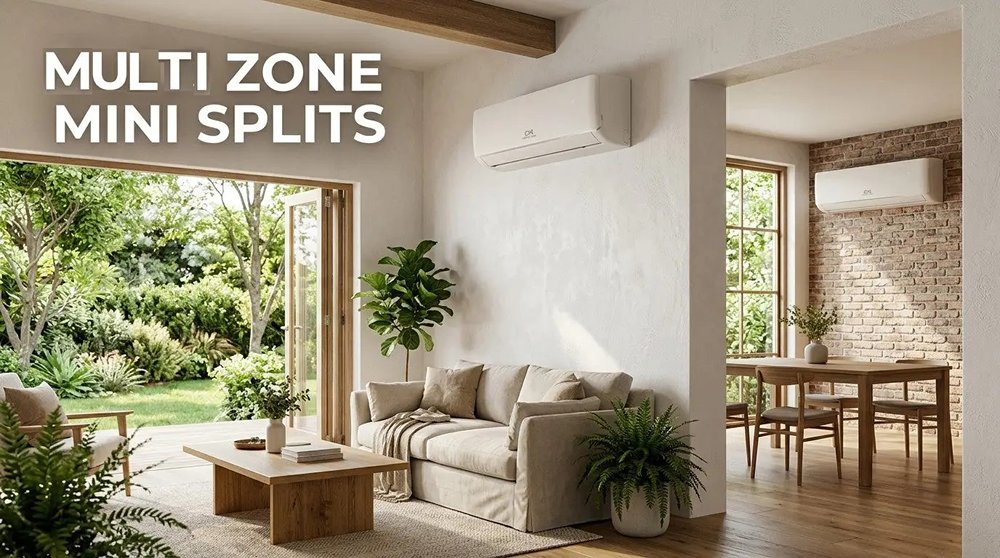




As the June heat settles across San Diego County, homeowners in two-story properties face a frustrating architectural reality: the second-floor temperature tax. You set your central thermostat to a comfortable 72°F downstairs, but your upstairs bedrooms still feel like a sauna.
Because hot air naturally rises (thermal stratification) and roofs absorb solar radiant heat all day long, traditional single-zone HVAC systems cannot keep two-story homes evenly cooled. Forcing a single central system to fix this issue usually results in freezing first floors and astronomical SDG&E utility bills.
To achieve true, balanced comfort, you need specialized engineering. Here is a technical guide on how to size, specify, and deploy a multi-zone mini-split system to permanently solve the two-story cooling dilemma in San Diego properties.
The Physics of the Problem: Why Central Air Fails Two-Story Homes
Traditional central air conditioning relies on a single thermostat, usually located on the first floor. Once the downstairs reaches the target temperature, the system shuts off — regardless of how hot it still is upstairs.
If you try to balance this by closing registers downstairs, you restrict airflow, increase static pressure within your ductwork, and risk freezing the evaporator coil. If you are weighing your long-term options, read our deep dive on Ductless Mini-Split vs. Central Air: Which is Better for Older San Diego Homes? to see why ductwork constraints fail multi-level layouts.
Sizing and Configuration Strategies for Two-Story Layouts
When designing a ductless system for a two-story home, proper BTU sizing and equipment selection prevent short-cycling and component wear.
Strategy A: The Hybrid Approach (Zoning the Upstairs Only)
If your home already has a functioning central AC but the upstairs remains unlivable in July, you don’t necessarily have to replace the whole system.
- The Blueprint: Leave the central air to handle the lower level. Install a multi-zone mini-split outdoor condenser dedicated entirely to the second floor, placing an individual indoor air handler (head) in each bedroom.
- The Benefit: This instantly isolates the highest heat load area without paying for a full-house replacement.
Strategy B: The Multi-Zone Whole-House Overhaul
For homes looking to eliminate inefficient central units entirely, we design a multi-split configuration powered by an inverter compressor.
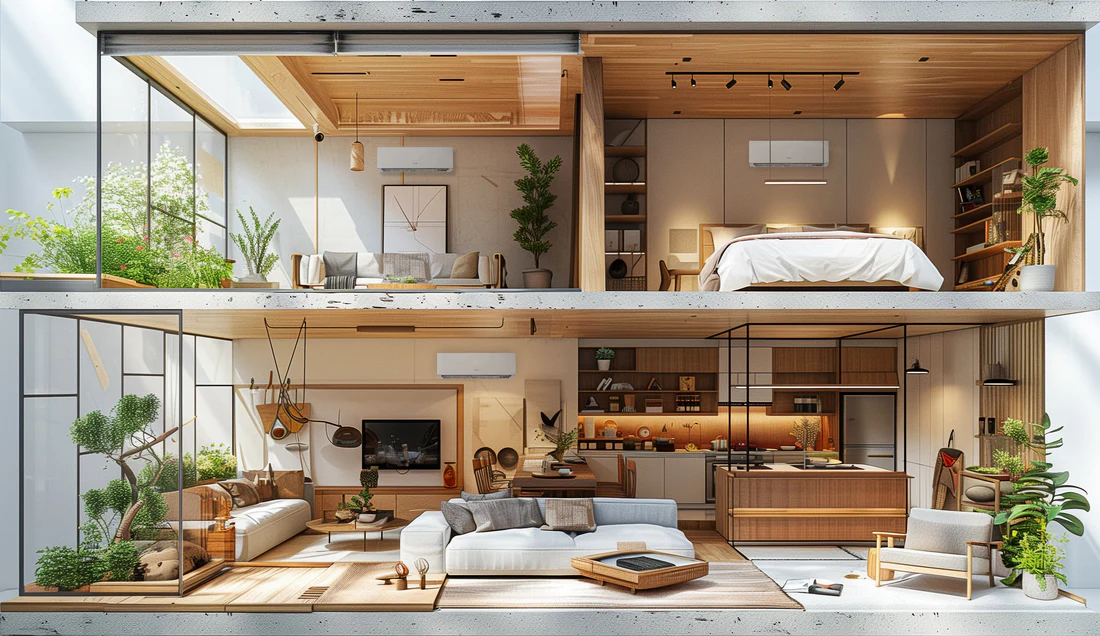
- First Floor: A high-capacity single head (e.g., a 18,000 to 24,000 BTU unit) in the open-concept living/kitchen area.
- Second Floor: Multiple smaller, low-BTU heads (e.g., 6,000 to 9,000 BTUs) in each separate bedroom or home office.
- The Blueprint: All these indoor units run off a single, multi-port outdoor condenser, keeping your property’s exterior footprint clean and tidy.
Technical Specifications: Manual J Calculations & Inverter Control
Never let an HVAC contractor size your multi-zone system based on a simple square footage “rule of thumb.” A professional installation requires a Manual J Load Calculation, which accounts for:
- Roof Radiant Load: The second floor absorbs direct solar radiation from the roof structure, requiring higher BTU compensation per square foot than the ground floor.
- Inverter Adjustments: We utilize advanced Inverter HVAC Systems (like LG or Bryant professional lines). Unlike standard compressors that switch strictly ON or OFF, inverter compressors scale down to micro-speeds. This allows a multi-zone system to deliver exactly 6,000 BTUs to a single bedroom at night while the rest of the house units are turned off.
To understand how properly sized equipment operates at peak efficiency, visit our Ductless Mini-Split Installation in San Diego page.
Guarding Against San Diego’s Coastal Elements
When specifying multi-zone layouts, lineset length matters. Connecting multiple upstairs heads to a ground-level condenser requires longer copper linesets and precise refrigerant charge adjustments.
Furthermore, if your two-story property is located near the coast (e.g., Pacific Beach, La Jolla, or Coronado), your outdoor condenser is constantly exposed to ocean breezes. Salt-laden air accelerates the oxidation of aluminum coils, which can lead to premature leaks in complex multi-port systems. Homeowners must ensure their equipment features anti-corrosive coil coatings. For a breakdown of environmental risks, read Common Ductless Mini-Split Problems Caused by San Diego’s Salt Air.
Frequently Asked Questions (FAQ)
Yes. Modern multi-zone outdoor condensers are engineered with multiple ports and variable-capacity inverter compressors. A single outdoor unit can easily power up to 5 (and some commercial models up to 8) independent indoor heads, allowing you to run lines to both the downstairs living room and upstairs bedrooms simultaneously.
Our installation teams route the refrigerant line sets, drain lines, and electrical cables up the exterior wall of the house. To keep your property looking sharp, we encase these lines in durable, paintable protective covers (slim ducts) that match your home’s exterior siding or stucco.
Yes, significantly. Traditional central air cools your entire home even if you are only using one bedroom upstairs. With a multi-zone system, you only conditioned the spaces you occupy. Combined with energy-efficient inverter technology, this zone-control eliminates energy waste and cuts cooling costs by up to 40%.
No. Each indoor zone operates independently with its own electronic expansion valve and control board. If an upstairs head experiences an issue or requires service, the other indoor units on the system will continue to heat and cool normally. For expert diagnostics, review our Ductless Mini-Split Service in San Diego protocols.
Stop Overpaying to Live in a Hot Second Floor
Don’t suffer through another brutal summer month with uneven cooling and soaring electric bills. Trust Omega Air’s licensed C-20 technicians to design a balanced, code-compliant multi-zone system customized for your multi-level home.