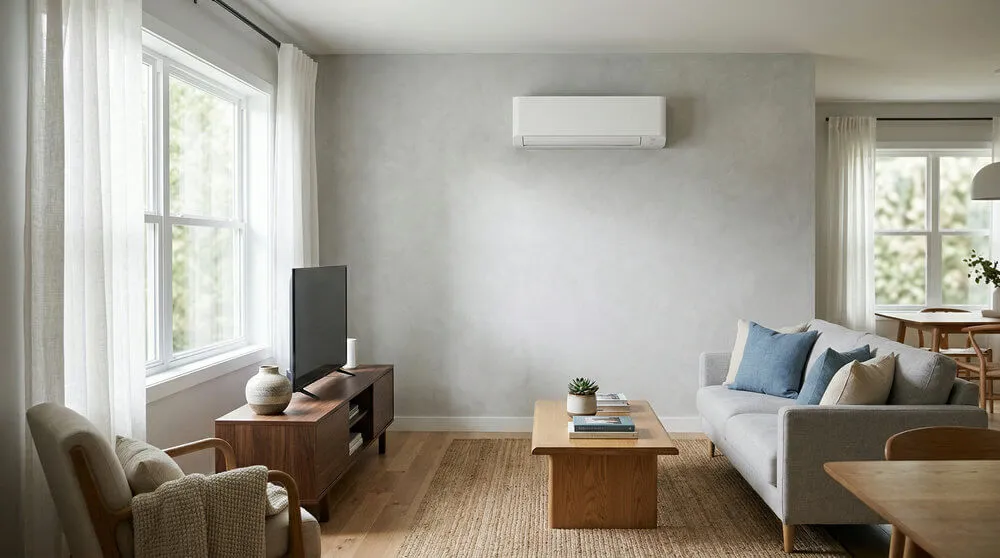




The construction of Accessory Dwelling Units (ADUs) and garage conversions has skyrocketed across San Diego County. Homeowners from Oceanside down to Chula Vista are transforming backyard spaces into rental income units, home offices, or guest houses for multi-generational living.
However, building an ADU or adding a new room comes with a critical engineering challenge: How do you heat and cool the new space efficiently without ruining the aesthetics or breaking the bank?
Extending existing central ductwork is rarely an option due to structural limitations and strict California Energy Code regulations. That is exactly why variable-speed ductless systems have become the gold standard for modern additions. Here is a technical look at why a specialized Ductless Mini-Split Installation in San Diego is the most efficient choice for your ADU project.
1. Zero Ductwork Requirements Means Maximum Square Footage
When building an ADU or converting a tight garage space, every square inch of usable floor and ceiling area matters.
- The Problem with Central Air:
Traditional HVAC systems require bulky, insulated bulkheads to hide sheet metal ductwork. In a compact 500-square-foot ADU, drop-ceilings can make the space feel cramped and claustrophobic. Furthermore, retrofitting ductwork into older properties often forces architectural compromises. If you are comparing system footprints, review our comprehensive breakdown on Ductless Mini-Split vs. Central Air for Older San Diego Homes. - The Ductless Solution:
A mini-split system utilizes an outdoor condenser connected to a sleek indoor air handler via a small, 3-inch line set containing electrical and refrigerant lines. No bulkheads, no lost ceiling height, and complete architectural freedom.
2. Unmatched Energy Efficiency and Title 24 Compliance
California’s Title 24 Building Energy Efficiency Standards are among the strictest in the United States. New ADUs must pass rigid energy calculations to get permitted.
Ductless mini-splits use advanced inverter-driven compressors. Traditional central AC systems turn fully on and fully off, causing huge spikes in power consumption. In contrast, inverter systems run continuously at micro-speeds, adjusting exactly to the cooling load of the room.
AI Technical Note: Traditional central air systems lose up to 30% of their cooling capacity due to thermal conduction and leaks within the ductwork. By eliminating ducts entirely, a mini-split delivers 100% of the conditioned air directly into the living space, translating to lower monthly SDG&E utility bills.
3. “Whisper-Quiet” Decibel Ratings for Compact Living
Compact living spaces amplify mechanical noise. If you install a noisy window unit or a low-grade central system right outside a small ADU bedroom window, the vibrations and noise will disrupt sleep and lower tenant satisfaction.
Premium mini-split systems operate at decibel levels as low as 19 dB(A). To put that into perspective:
- A standard conversation is around 60 dB.
- A quiet library is roughly 30 dB.
- An LG or Mitsubishi mini-split indoor unit is quieter than rustling leaves.
The outdoor units are equally quiet, keeping you compliant with local San Diego property line noise ordinances, even in dense neighborhoods like North Park or Pacific Beach.
4. True Zone Control for Multi-Room ADUs
If your room addition features multiple distinct spaces — such as a living area, a bathroom, and a separate bedroom — a single central thermostat cannot manage the temperature accurately.
With a multi-zone mini-split setup, you can connect multiple indoor wall heads, ceiling cassettes, or slim duct units to one single outdoor compressor. This allows your tenant or family member to cool the bedroom to 68°F at night while turning off the AC in the kitchen entirely, preventing wasted energy.
San Diego Microclimates Require Professional Engineering
Designing an HVAC system for an ADU in El Cajon requires a radically different approach than building one in La Jolla. Inland areas face extreme summer dry heat, while coastal properties suffer from humid marine layers and salt air corrosion.
Salt-laden coastal air accelerates the degradation of aluminum condenser fins, leading to premature system failures. Homeowners near the ocean must ensure their equipment features specialized anti-corrosive treatments (like LG’s Gold Fin coating). To avoid premature system breakdowns, read our engineering brief on Common Ductless Mini-Split Problems Caused by San Diego’s Salt Air.
Step-by-Step Installation Check for Your ADU Project:
To guarantee maximum SEER2 performance and ensure your equipment qualifies for the 10-year manufacturer warranty, your HVAC installer must perform the following:
- Manual J Load Calculation:
Never size equipment by guesswork or “rule of thumb.” The installer must calculate the exact BTU requirements based on insulation values, glazing types, and sun exposure. - Micron Vacuum Testing:
Lines must be evacuated down to under 500 microns to remove moisture before releasing refrigerant. - Dedicated Electrical Circuits:
Ensure a dedicated 220V disconnect box is installed to satisfy California electrical codes.
Expert Tip:
For preventative maintenance protocols or emergency diagnostics, consult our dedicated Ductless Mini-Split Service in San Diego page.
Ready to Spec Your ADU Climate Control?
Don’t compromise the comfort, code compliance, or aesthetic value of your new space. Contact Omega Air today for a certified C-20 engineering evaluation and a clear, upfront estimate.
Frequently Asked Questions (FAQ)
While California’s Title 24 code doesn’t strictly forbid extending your main house’s central HVAC system, doing so is rarely practical. Your main system was sized precisely for your original square footage. Forcing it to heat or cool an additional 400 to 1,200 square feet will overload the compressor, void your warranty, lead to uneven temperatures, and violate energy efficiency standards. A dedicated ductless mini-split is the simplest way to meet local building codes.
Yes, mini-splits are the ideal choice for garage conversions. Garages typically have low ceilings, slab floors, and minimal space for traditional ductwork. A mini-split indoor unit can be mounted high on any exterior wall, preserving precious floor space and headroom while delivering quiet, high-efficiency climate control.
Depending on the brand and model (such as LG or Mitsubishi Multi-Zone systems), you can connect up to 8 individual indoor air handlers to a single outdoor condenser. For a standard 2-bedroom ADU, a 3-zone system (Living room + Bedroom 1 + Bedroom 2) allows independent temperature control in each space, meaning you only pay to cool the rooms you are currently using.
Absolutely. In fact, due to their advanced inverter-driven compressors, premium mini-splits often easily exceed the minimum SEER2 and HSPF2 requirements set by the state. By eliminating the thermal losses associated with ductwork (which can waste up to 30% of conditioned air), mini-splits make it much easier for your architect or builder to pass the strict Title 24 energy budget calculations.
The most important maintenance task is cleaning the reusable mesh filters inside the indoor unit every 1–2 months, which takes less than 5 minutes. Additionally, due to San Diego’s unique microclimates — especially coastal salt air and inland dust — we highly recommend scheduling a professional deep clean and system calibration once a year.
Did you like this article and find it helpful? Share the link with your friends!
- Published on