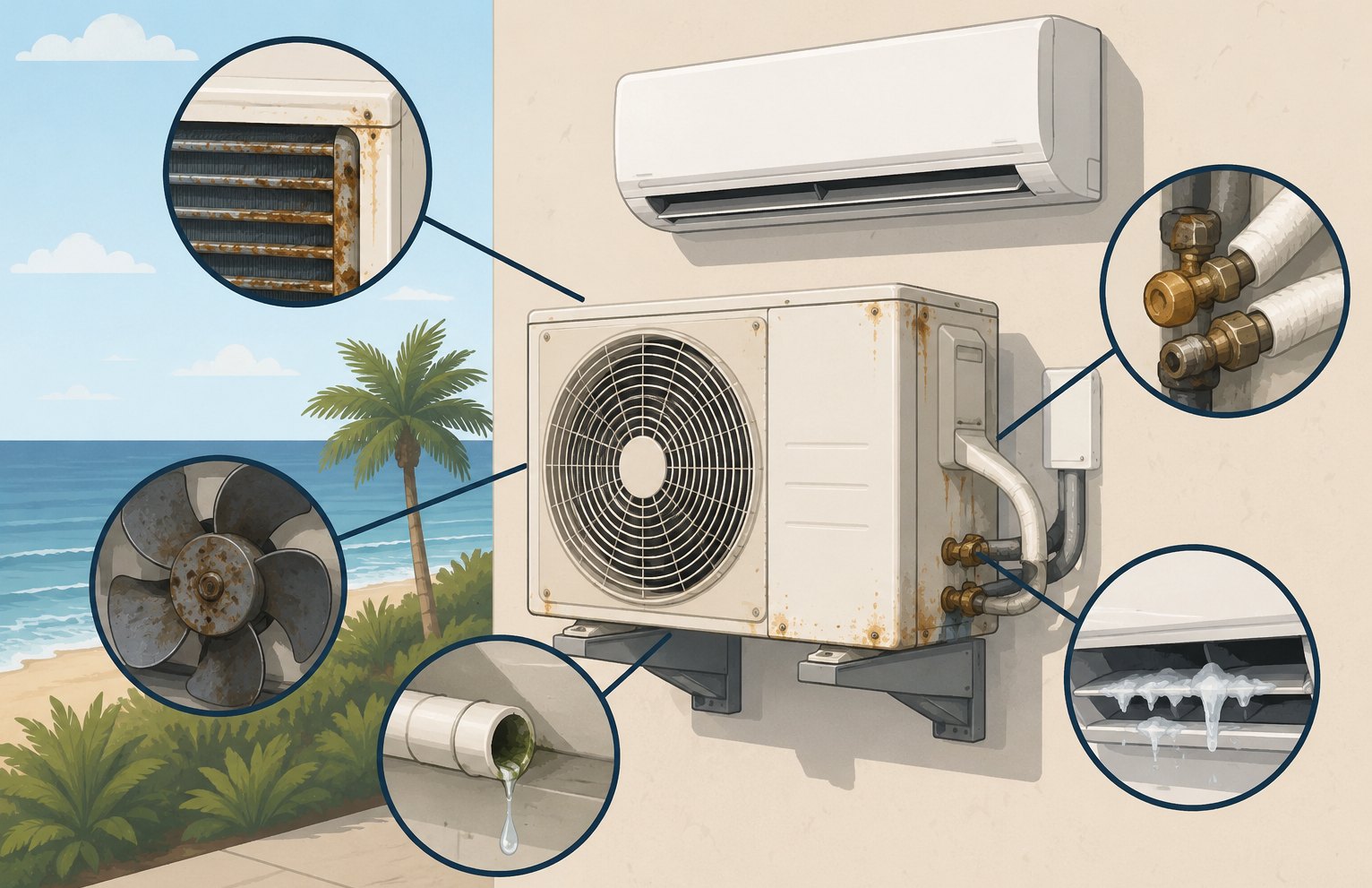




Living along the San Diego coast offers stunning views, but it also presents a unique challenge for your home’s HVAC system. 🌊
Common Ductless Mini-Split problems caused by San Diego’s salt air can lead to system failure much sooner than expected if not addressed by specialists.
The Pacific Ocean breeze carries microscopic salt particles that are highly corrosive to the delicate aluminum fins and copper coils inside your outdoor unit. In neighborhoods like La Jolla, Coronado, and Pacific Beach, we’ve seen units deteriorate in half the time compared to inland systems in El Cajon or Poway.
1. The “Silent Killer”: Coil Corrosion (Pitting) 🧂
The most frequent issue we encounter is formicary corrosion. Salt air reacts with the moisture on the outdoor condenser coils, creating tiny pits in the copper and aluminum.
- The Symptom: Your system starts losing cooling capacity, and you might notice “white rust” or flaky powder on the outdoor unit.
- The Result: Refrigerant leaks that are difficult to patch, often requiring a full coil replacement. 🛠️
2. Failed Communication Boards ⚡
Modern ductless mini-splits rely on sensitive inverter boards. Salt air is conductive; when it settles on electronic components, it can cause short circuits or “communication errors” between the indoor and outdoor units.
- The San Diego Fix: We recommend using specialized anti-corrosion coatings (like SeaCoast protection) for units located within 5 miles of the ocean.
3. Clogged Condensate Drains from Salt Crust 💧
In high-humidity coastal areas, salt can mix with dust and biological growth, creating a thick “crust” in the drain pan of your indoor unit.
- The Pain Point: This leads to water leaking down your interior walls, causing expensive drywall damage.
Coastal vs. Inland Maintenance
| Feature | Coastal San Diego (0-5 miles) | Inland San Diego (10+ miles) |
|---|---|---|
| Coil Cleaning | Every 6 months (Required) | Once a year (Standard) |
| Corrosion Risk | Extreme (Salt Spray) | Low (Dust/Dry Heat) |
| Typical Lifespan | 8-12 years | 12-15 years |
| Essential Protection | Anti-corrosion coating + deep flush | Standard precision tune-up |
How to Protect Your Ductless Investment?
To prevent these mini-split problems, you need more than just a generic filter change. You need a team that understands the “marine layer” effect.
- Rinse the Outdoor Unit: Use a low-pressure garden hose to gently rinse the salt off the outdoor condenser every month.
- Schedule Specialized Service: RegularDuctless Mini-Split Maintenance is the only way to catch micro-leaks and clear salt deposits before they eat through the metal.
- Professional Cleaning: Our deep-cleaning process removes the salt film that standard “dusting” misses.
Need Expert Help Near the Coast? 📍
At Omega Air, we don’t just fix ACs — we engineer them to survive the San Diego climate.
We are proud to be a highly-rated local business — check out our real customer results and service areas on our Google Business Profile ⭐⭐⭐⭐⭐
Complete Ductless Support in San Diego:
If the salt air has already taken a toll on your system, we provide integrated solutions to get your comfort back:
- Ductless Mini-Split Repair: From fixing refrigerant leaks to replacing salt-damaged inverter boards.
- Ductless Mini-Split Installation: We offer units with factory-applied anti-corrosion coatings for coastal homes.
FAQ for Coastal Residents
Not directly, but “neglect” does. If you don’t perform professional maintenance and the salt destroys the coils, manufacturers like Mitsubishi or Daikin may deny your claim.
Generally, no. Covers can trap moisture and salt against the metal, actually accelerating corrosion. A better solution is a protective coating and regular rinsing.
Yes, some brands offer “Blue Fin” or “Gold Fin” technology specifically for salt-air resistance. We can help you select the right model during an installation consult.
Did you like this article and find it helpful? Share the link with your friends!
- Published on