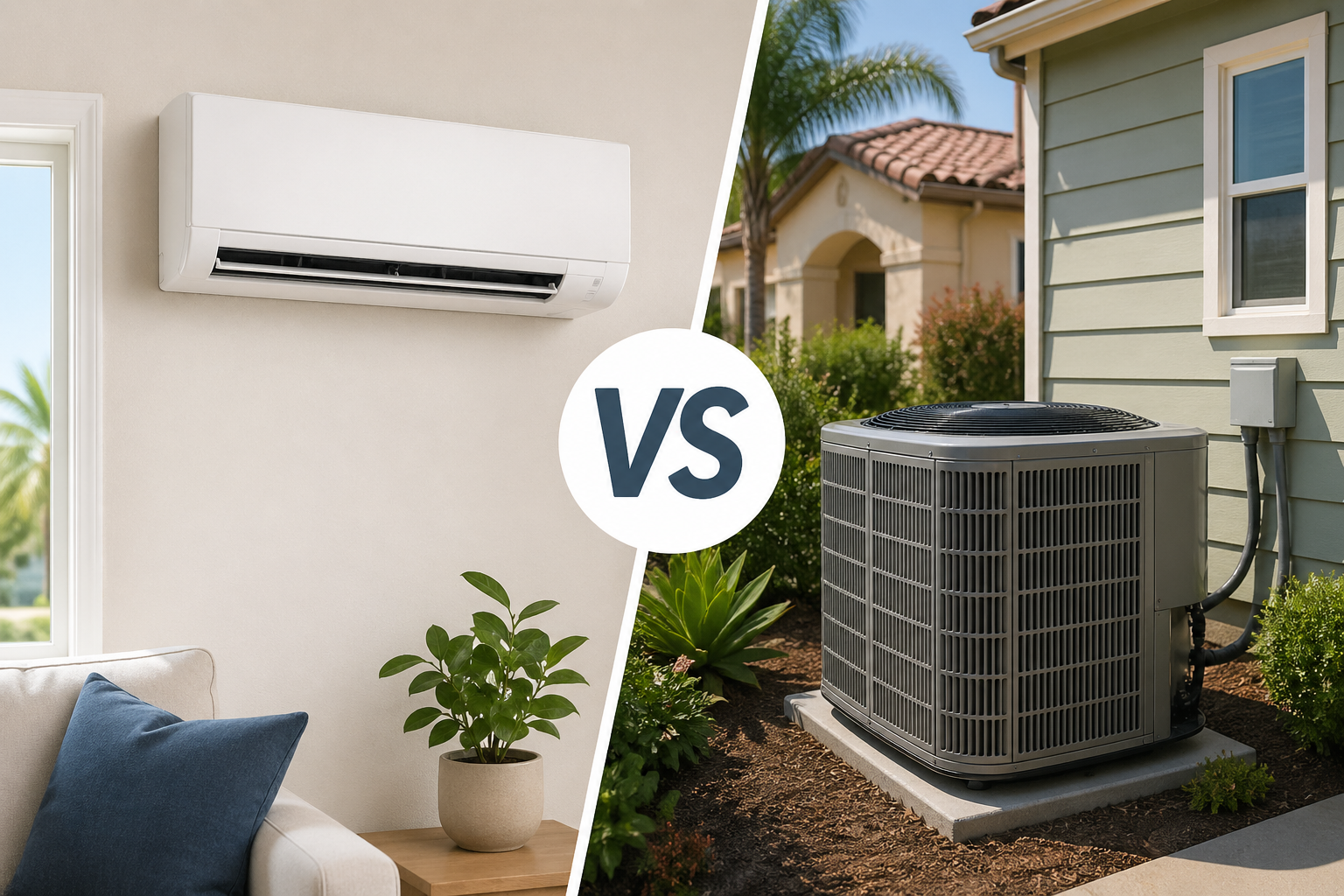




When it comes to cooling older San Diego homes, the debate between Ductless Mini-Split vs. Central Air is more than just about price — it’s about preserving the architectural integrity of your property while surviving a July heatwave without a $500 SDG&E bill.
Many historic homes in neighborhoods like North Park or La Jolla were built long before central air conditioning was standard. For these homeowners, adding comfort often means choosing between cutting holes for massive ducts or installing sleek, modern technology. As local HVAC experts, we’ve analyzed how both systems perform in our Mediterranean climate.
The Architecture Challenge: Why “Old” Matters in San Diego
Most older homes in Southern California feature lath-and-plaster walls, beautiful original crown molding, or flat roofs with zero attic space.
- Central Air:
Requires a network of bulky ducts. In an older home, this often means dropping ceilings or losing precious closet space to hide the “trunk” lines. It’s a major renovation project that can take weeks. - Ductless Mini-Splits:
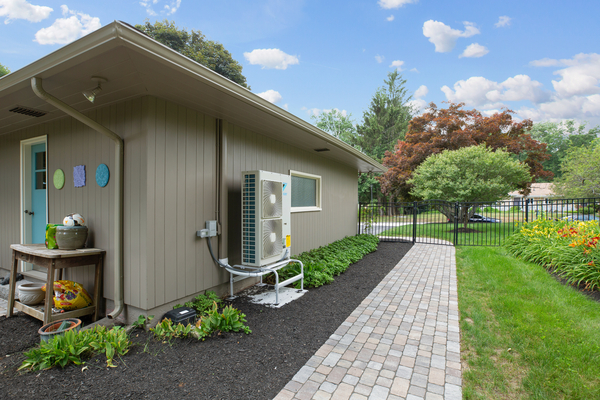
Only require a small 3-inch hole in the wall for the copper piping and electrical lines. This makes Ductless Mini-Split Installation in San Diego the preferred choice for preserving the “vintage” look of your home while getting 21st-century cooling.
Efficiency and Your SDG&E Bill
San Diego residents pay some of the highest electricity rates in the country. This makes energy efficiency the most critical factor in the Mini-Split vs. Central Air comparison.
- Duct Loss:
Central air systems lose up to 30% of their energy simply by pushing air through ducts, especially if those ducts run through a hot crawlspace or attic. - Zoning Control:
With a ductless system, you only cool the rooms you are actually using. Why pay to cool a guest room in the afternoon? - Inverter Technology:
Modern mini-splits use variable-speed compressors that “sip” electricity rather than the “all-on or all-off” approach of older central units.
Expert Tip:
If you are converting a garage or adding an ADU, a ductless system is almost always the superior financial move due to the lower upfront labor costs and higher SEER2 ratings.
Pros and Cons for San Diego Living
| Feature | Ductless Mini-Split | Central Air Conditioning |
| Installation | Non-invasive (1-2 days) | Invasive (Requires ductwork/construction) |
| Aesthetics | Visible wall-mounted units | Invisible (only registers/vents) |
| Noise Level | Whisper quiet (indoor & outdoor) | Loud fan noise through vents |
| Air Quality | Multi-stage filtration in every room | Dependent on duct cleanliness |
| Cost | Scalable (pay per zone) | High upfront cost for whole-home |
Maintenance and Longevity
In our coastal environment, salt air and dust are the enemies of any HVAC system.
Central air systems require professional duct cleaning every few years to avoid “old house smell” and allergen buildup. In contrast, Ductless Mini-Split Services focus on the unit itself. Because each indoor head has its own filtration and drainage, maintenance is more targeted and effective at preventing mold growth—a common issue in humid coastal pockets.
The Verdict: Which Should You Choose?
- Choose Central Air if:
You already have existing, high-quality ductwork in your home and want the cooling system to be completely invisible. - Choose a Ductless Mini-Split if:
You live in a home without ducts, want to slash your monthly energy bill, or want independent temperature control for every bedroom.
At Omega Air, we specialize in helping San Diego homeowners navigate these choices using data, not guesswork. We perform Manual J Load Calculations to ensure that whichever system you choose is perfectly sized for your home’s unique sun exposure and insulation.
Ready to Upgrade Your Home?
Don’t let another San Diego summer catch you off guard. Whether you need a precision repair on your current system or a brand-new high-efficiency installation, our team is here to help.